Matilde, my grandmother, never said gelatin. The dessert she offered on some Sundays was called jaletina, and she presented it in a very exotic way: a two-colored ring mold crowned with peach halves or whole prunes suspended in a glossy layer of flavor that contrasted with the milk-based bottom layer. All of us grandchildren laughed when she had us carry out the plates of jaletina, which to us was gelatin. But that was who she was, and she went to her grave without uttering that word, which I believe caused her great vexation: “gelatin.”
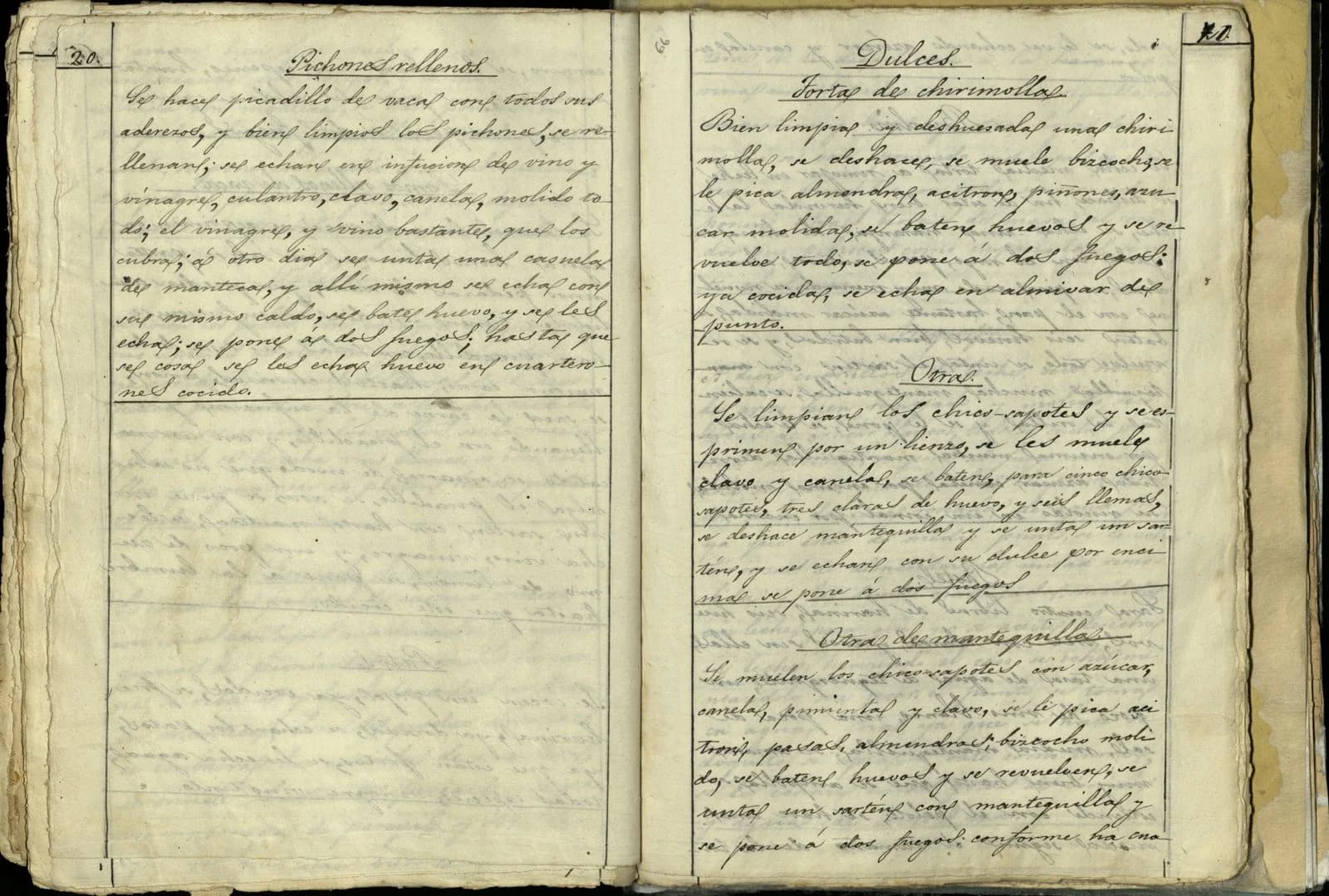
Now that I am reviewing nineteenth-century cookbooks from Puebla de los Ángeles, I have come across recipes for jaletinas, and the mocking laughter of a dozen children who knew nothing of the term’s origins comes to mind. Guided by these documents, I try to imagine the afternoons in those kitchens tiled with Puebla talavera at the beginning of the twentieth century, the hours devoted to making sweets amid an atmosphere redolent of cinnamon, orange blossom, and freshly made caramel.
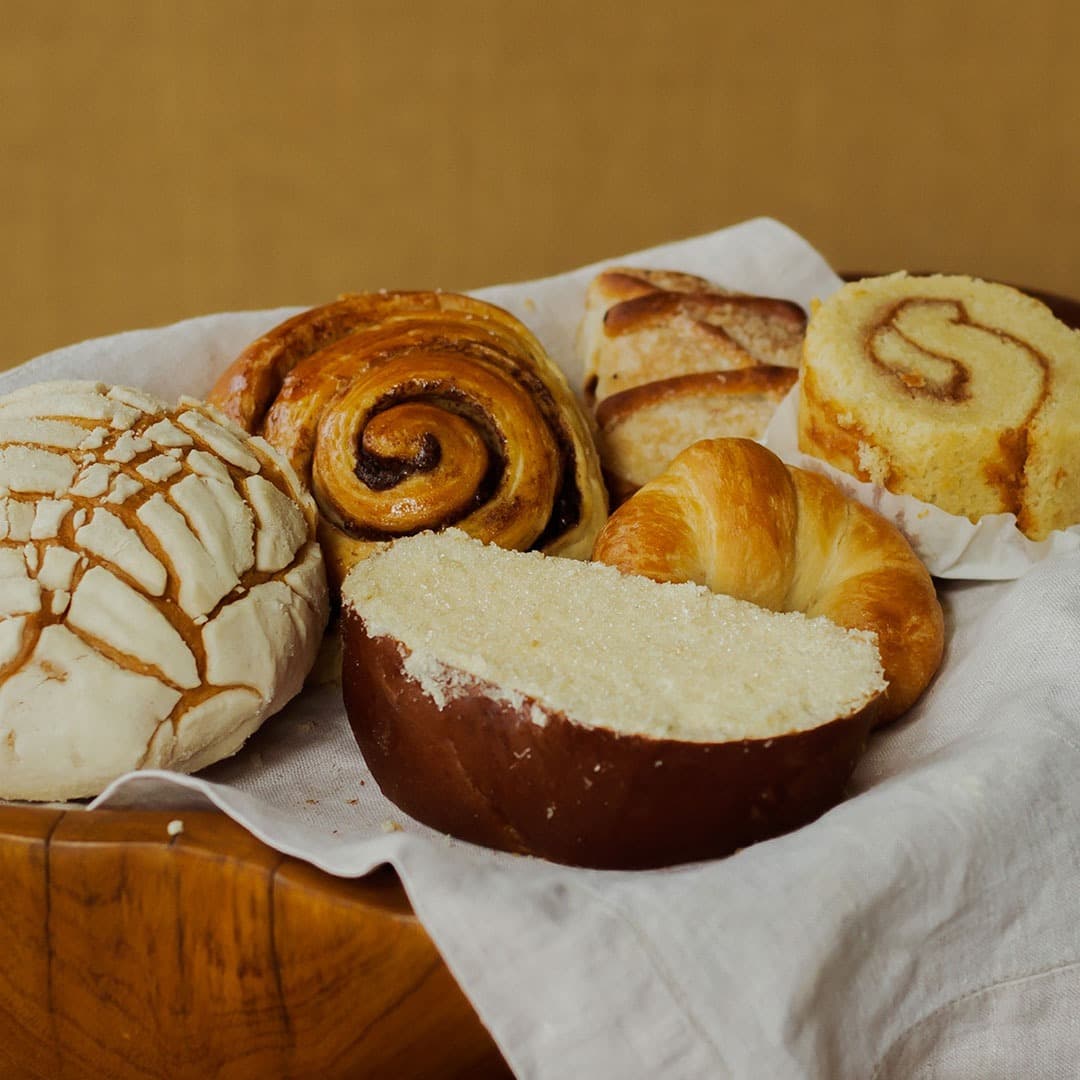
In those days, milk was measured in cuartillos, flour and sugar in pounds and ounces; syrups were prepared just in case, orange-blossom water and tequesquite water were kept on hand, and no one hesitated to use thirty egg yolks if the recipe called for them. Skilled doughs, suspiros, muéganos, buñuelos, camotitos, mamones, jericayas, gaznates, and jamoncillos were arranged in baskets for the enjoyment of young and old alike. Among them was pitayate, a pitaya jamoncillo made in May that took an entire afternoon to prepare: sugar, red pitayas, milk, a copper pan, and a wooden paddle for stirring without stopping until the bottom of the pan could be seen. Difficult to make, pitayate can now be found, if at all, only in some convent in the city center—and sometimes even the modern nuns have failed to reproduce it.
There is no doubt that traditional sweets require precision, dedication, patience, and time. If we add to that the fact that there were no refrigerators in the past, that not every house had ovens, and that people lacked the tools that now make clarification, straining, grinding, and various other methods easier, what those kitchens accomplished over the heat of ever-burning embers is quite admirable.
I say they never went out because, as Doña Alicia Enríquez told me—she who, beneath her cotton-candy hair, embroidered stories worthy of a collection—in the kitchens they had braziers, and after the meals were made, the afternoon sweets were prepared over them. In those days, coal depots were abundant in the city, and every house kept supplies of coal and ocote pine kindling. Once the fire was lit and the embers fanned to life with the bellows, they were carefully tended: cooking was done, and afterward the fire was not extinguished. The embers were placed in a small clay dish and covered with ash. The fire slept, and the next morning the still-glowing embers were taken out and the fire rekindled with fresh coal. Then the pot of beans was set to cook, with a little dish of water placed on top; the water gradually warmed and was added to the beans whenever necessary. If cold water was added, the beans would seize up, so that little dish of warming water served a purpose. Beans, like milk, were boiled daily to keep them from turning sour, and to cool the milk, the pot was placed on the flowerpot rings of Puebla’s balconies, waiting for the night air to refresh it.
In the absence of ovens, cooking was done with heat from two sides. The current instruction in a recipe that usually ends with “and place in the oven at 180º C for 50 minutes” is the modernization of the final phrase that, as the nineteenth century drew to a close, read: “and cook over two fires.” Cooking over two fires meant nothing more than receiving heat from above and below. To achieve this, earthenware dishes were placed on a brazier and covered with enormous comales, on which red-hot embers were arranged.
On the other hand, the recommendation to “insert a toothpick, and when it comes out clean, it’s done” was then verified with the instruction “insert a popote.” But the popote was not the one resting in the milkshake of a pair of lovers. A popote was a kind of sturdy palm strip used to make brooms and hand brushes, and at that time it also served to test whether something was fully cooked.
Other preparations were cooked in a bain-marie or al rescoldo—that is, at the edge of the hearth. Or, as I found on one page of the family cookbook, making a pear sweet required filling a pot with chopped fruit and sugar, covering it, and burying it beneath the manure in the stable for 30 days. A rather daring version of slow fermentation cooking, to be sure.
The revisited “stages” have also been protagonists throughout the ages: mirror stage, caramel stage, soft-ball stage, nougat stage, and cajeta stage. These are textures that the cooks of old mastered to perfection without using mixers, whisks, or a Thermomix. Stages that seem to me like enchanting metaphors, speaking of certain movements, textures, and direct contact with the body.
Rainy afternoons in the capital of Puebla will always make one crave making those sweets overflowing with egg yolks, milks slowly scorched over the fire, letting seasonal fruits release their syrups, watching pumpkins drunk on piloncillo become entachadas, filling juicy gaznates with white meringue, or making gelatins be called jaletinas once again. Because the same iridescence that the rain leaves on the pavement is the tone we will always find when we see the bottom of a pan while making caramel.
María del Carmen Castillo / Puebla, Puebla
A version (now modified) was published in 2013 in Animal Gourmet.