Xochitotoltic
Yellow-flower atole
Karla Areli Rodríguez SalazarJuly 27, 20262 min read
The cuisine of the Mixteca Poblana, shaped by a semi-arid landscape, is defined by its deep ties to foraging and the rhythms of nature. Its ingredients shift with every season, reminding us that traditional cooking is born of respect for the land and gratitude for what it offers at each time of year.
Our cooking keeps ancestral techniques alive, passed down from generation to generation. Every dish represents a piece of our family history, strengthens the bonds of our community, and preserves our culinary identity. To cook, then, is also an act of memory, respect, and love.
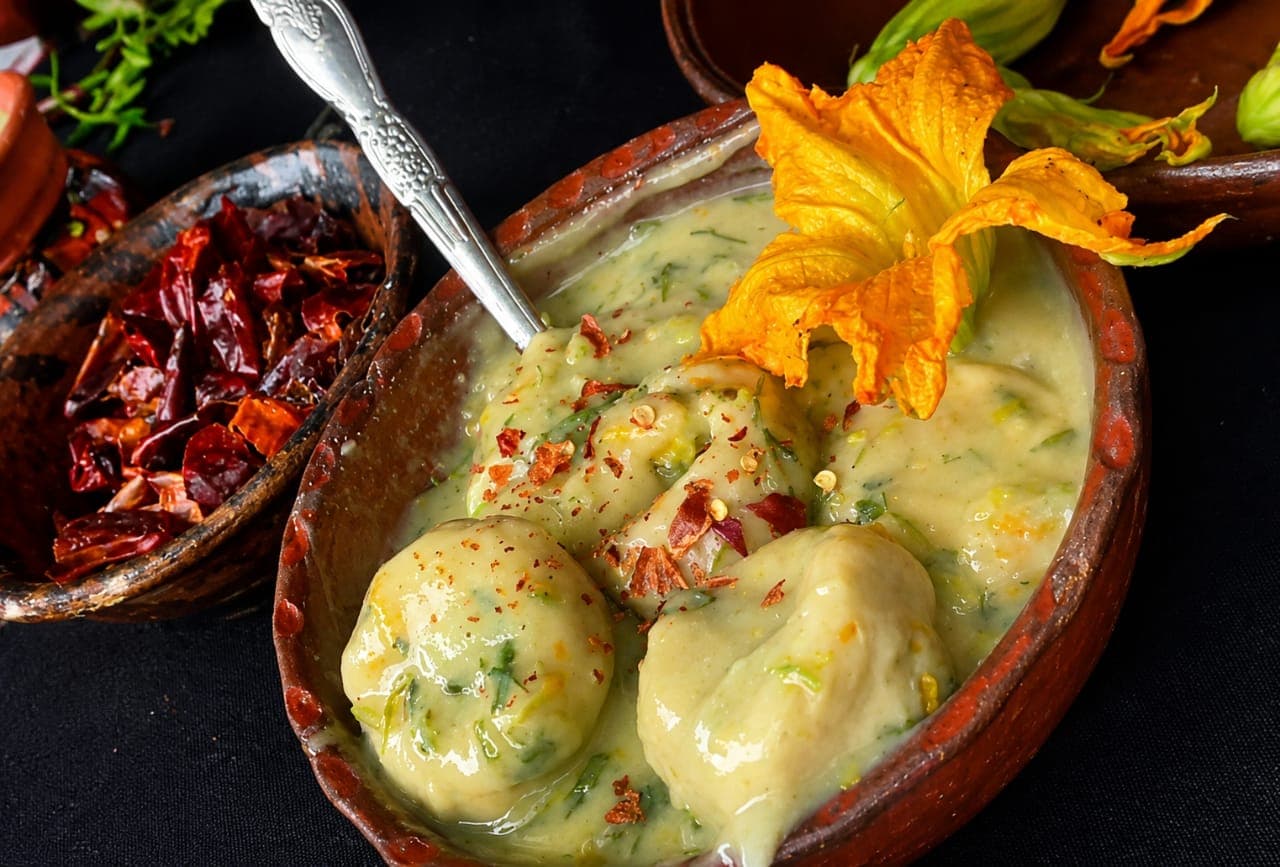
Xochitotoltic, known as yellow-flower atole, is a dish of pre-Hispanic origin that I consider one of the most representative of my community. Though it is a simple and humble recipe, it reflects the warmth, generosity, and empathy of our people.
It is prepared in autumn, when the milpa is teeming with life and squash blossoms herald the season's abundance. Its main ingredient is corn — the foundation of our diet since ancient times — transformed into textli (masa dough). To it are added squash blossoms, the fruit of our labor in the fields, and wild pepicha, gathered at dawn, whose fragrance perfumes the countryside as the farmer walks by.
While the blossoms simmer slowly with the pepicha over the tlecuil (hearth fire), costeño chile is toasted on the comal, ready to crown the dish with its flavor and aroma. At the same time, gathered as a family, we shape the xoxoyotas — small dough balls waiting for the moment they will join the broth.
Every time the broth begins to boil, my memory carries me back to childhood. I remember my father coming in from the fields after tending his goats, his shoes caked with mud from the seasonal rains that soaked the paths. His whistle announced it was time for us to gather around the table. In the kitchen, my mother, my aunt, and my grandmother arranged the cajetes with smiles on their faces while the scent of the hearth filled the house. We, still young girls, waited impatiently for our first taste of that long-awaited dish — one reserved for harvest time, a gift from nature that we would not enjoy again until the following year.
For me, Xochitotoltic is far more than food. It is the expression of the milpa, of farmworkers' toil, of our grandmothers' kitchens, and of the memories that give my community its identity. In every bite lives the history of our land, the strength of our roots, and the love with which tradition continues to nourish new generations.
Karla Areli Rodríguez Salazar / Huatlatlauca, Acatlán de Osorio, Puebla