I like inventing dishes, sometimes with whatever I have on hand at home and other times deliberately, starting with an idea that may be more or less vague.
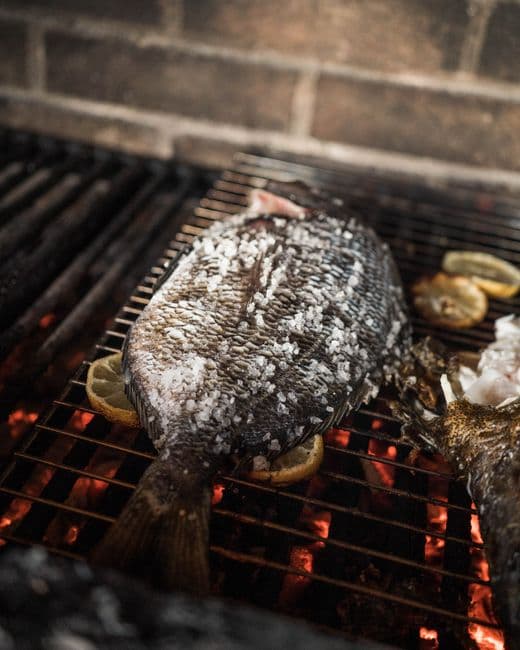
One day at the beach, I decided to make a version of tikinchik without red recado, or chili, tomato, or peas. I did use onion, because it’s basic to almost anything. I got a grouper weighing a couple of kilos (or three—I don’t remember exactly anymore, but it was a sturdy beast). After gutting and scaling it, I split it open along the back and dressed it with a generous coating of butter, salt, and pepper, then added onion rings, fresh mushrooms sliced into slivers, and cheese (I don’t remember what kind of cheese either. One of those that melts well).
Back then we had a charcoal grill. Getting it lit was a hassle, as was putting up with the smoke for a while and keeping it going until a bed of white and pink embers formed; once it had reached the right heat, we would put whatever we wanted to grill on the grate. With this fish, the matter was considerably more complicated: we had fashioned a sort of double grill out of steel rod, so that the fish was enclosed between the two elements (joined by little rings that worked like hinges and secured on the other side with a piece of string).
The idea was to grill the fish on one side and, once the skin side was browned, turn it halfway over. That’s the trick: gauging the right moment to turn the fish so the skin doesn’t burn, but the flesh has time to cook, allowing the animal to be turned only once, halfway, then left just long enough to lightly brown the exposed side, along with its vegetable accompaniments. I don’t remember whether I then placed strips of bell pepper on top, fried in olive oil until soft and their skin was almost completely black; but if I didn’t, I should have. What I do remember without fear of being wrong is that the dish was absolutely delicious.
Now that I’m visiting Asturias, I’m finding it particularly difficult to recall the old invention of Europeanized tikinchik. It’s understandable: sated with pork-liver soup, fabada, kid goat, and cream cheese with chocolate (one day’s menu), followed by tomato-braised bonito, fried anchovies (boquerones) in olive oil with a light snowfall of salt, country salad, and Cabrales cheese (the next day), thinking about meals prepared more than a decade ago, however successful they may have been, isn’t easy. What is clear to me is that going from table to table, village to village, country to country, are the kinds of things that give some meaning to life, which often seems to have none. Enjoy your meal, and see you at dinner.
Rafael Robles de Benito / Mexico City, Mexico