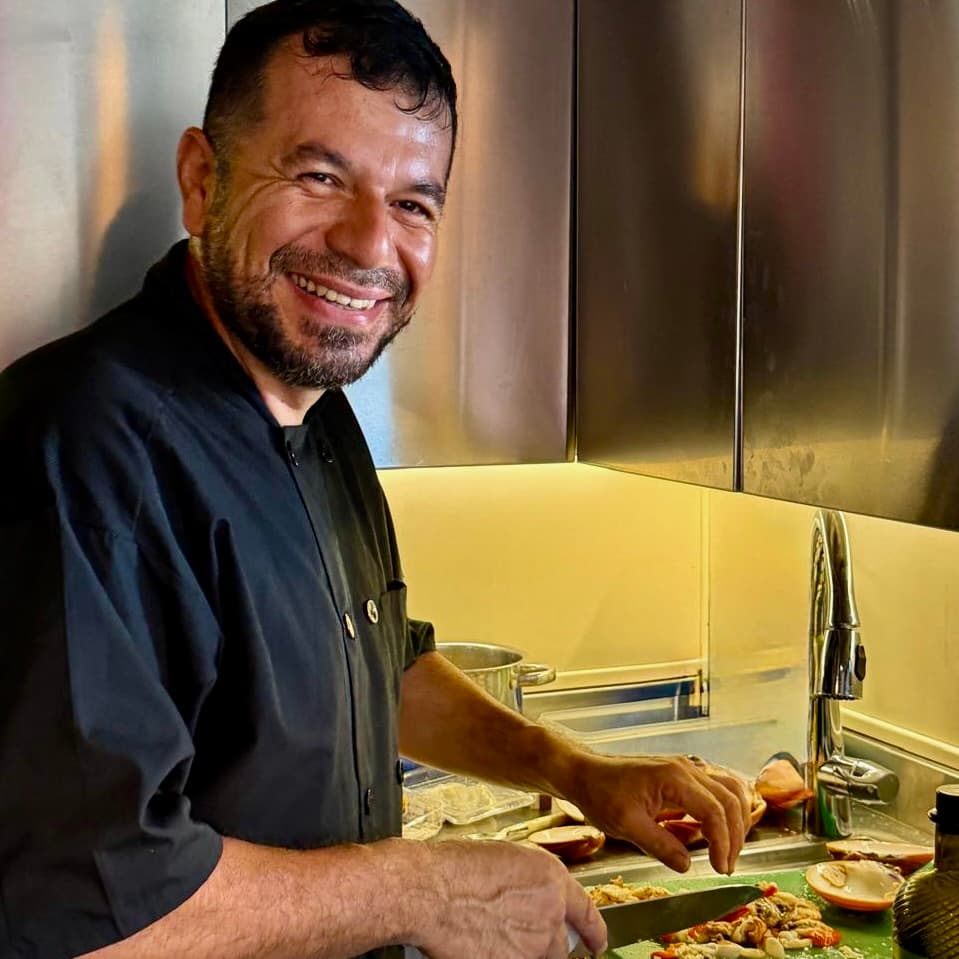
I’m from Mexico City, and I worked there. A friend was hired at a restaurant here in Campeche, and they needed staff. He called to see if I was interested. I was already a little tired of the hustle and bustle of the city, and I had left a restaurant I didn’t like.
I arrived in Campeche in January 2019 to work with my friend, and I stayed there for two years.
Then I wanted to explore other things, and during the pandemic, Ceci and I already had two palapas here that we rented out for people to spend the day at the beach. It was perfect for the pandemic: they could accommodate only a few people, and there was considerable space between the two palapas. At first, we only sold ceviche and empanadas. I was used to serving very different food, but having this space was a great opportunity to cook.
Most of the people who come to Casa Balá live in Campeche. When we started, we saw that people were always asking for food, so we began adding new things to the menu. We publicized our restaurant in Mamis del Sureste, a magazine whose readers are mostly mothers with various occupations—they sell clothes, do housework, and so on. That’s how more people began to come.
Coming from Mexico City, I really missed tortillas, corn, the colors—everything. Since I was a child, corn has been very important to me.
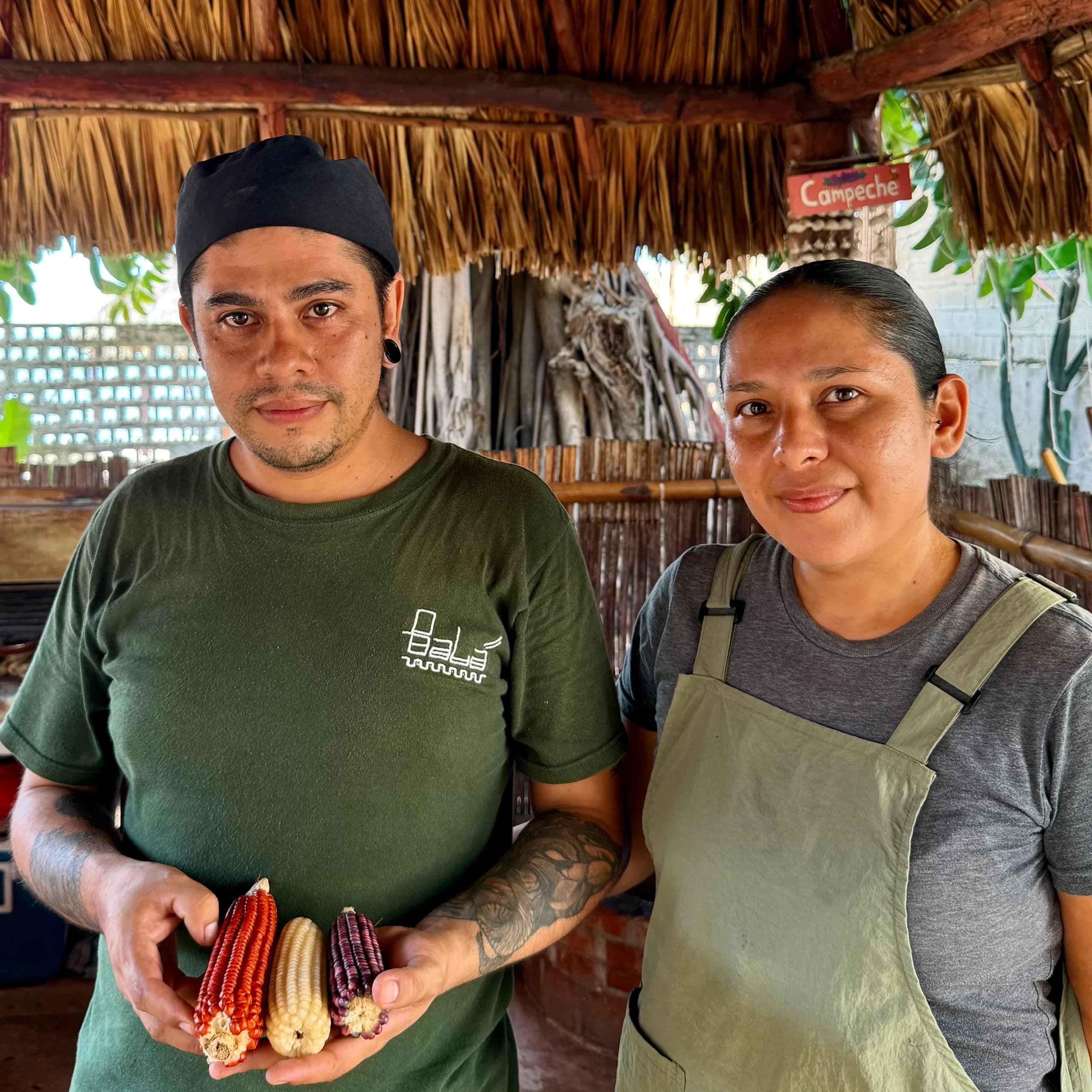
Everything fits in a taco. I wanted to make gorditas and griddle-cooked quesadillas. Someone invited us to a corn fair featuring native varieties, and there I met people from a community that grows agroecological corn, without pesticides. We don’t damage the soil, and we’re guaranteed clean corn—not genetically modified corn. Getting the corn to us is a challenge.
Most of my recipes include tomato, chile, onion, garlic, peppers, habanero, xcatic, and dried chiles—guajillo, pasilla, and ancho. I also cook with a lot of seeds: chile seeds, sunflower seeds, sesame seeds, peanuts, chia, and pumpkin seeds in the pipián. We make little pork-pipián tlacoyos.
Balá is a fish in the ray family; it’s a type of ray. In Campeche, pan de cazón is widely eaten, but here in Lerma, people eat a lot of balá. It’s a fishing town, and families eat the catch of the day. Balá is home cooking. The fishermen bring me fresh fish, and the only thing they bring me from elsewhere is shrimp.
One of my biggest challenges is getting people to accept different food. I smoke the balá, and there’s resistance to new things. I seek to use only products without any preservatives, nothing with warning labels, nothing canned; there are no soft drinks or bottled beverages here. We don't want people to drink coca - cola. We have to raise people’s awareness and show them everything you can do with products from the market alone. We don’t buy anything from any supermarket; we use local, seasonal products.
Fishing takes place year-round. Here there’s snapper, mulato, rubia, snook, huachinango, crab claws, cazón, and octopus. Everything has a closed season. You can’t always find everything. It’s regulated, although sometimes octopus is offered out of season, and we don’t buy it.
Here we grow chaya, squash, epazote, clitoria, miniature roses, and corn. We use the flowers to make teas and also to decorate the dishes.
I hope you really enjoy our cooking and that we can support local people, the people with whom we build networks for Mexican products, even if they aren’t from Campeche. We support Mexican products and buy products from all over Mexico.
For dessert, there’s an ice cream and a fruit ice—we crave that kind of thing in this heat.
César Rodríguez / Azcapotzalco, Mexico City, Mexico